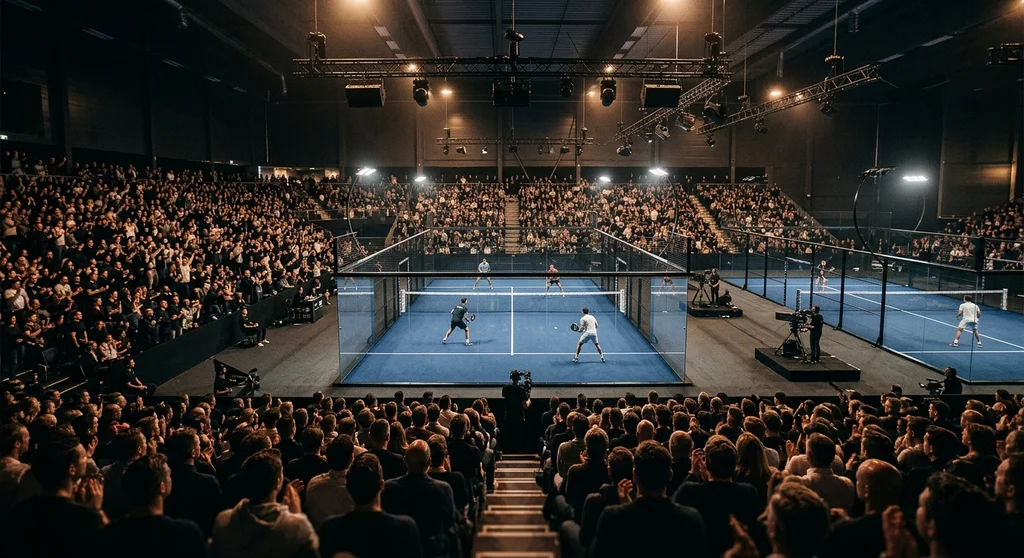
A padel tournament in Govan just got something UK padel events almost never do: live coverage on the BBC. The inaugural Scottish Open Padel Championships wrapped up at Racket Barn in Glasgow on Sunday, and the finals were streamed live on BBC iPlayer and the BBC Sport website – four matches, including both the men’s and women’s finals, produced by PlayVision Sports Broadcasting for BBC Scotland. If you’ve ever tried to explain padel to a friend by saying “it’s a bit like tennis, sort of,” this is one of the first times the BBC has done some of that explaining for you.
What happened on court
The championships ran from Friday 18 to Sunday 20 September, an LTA Padel British Tour Grade One event with a £4,000 prize pot and ranking points at stake, hosted by Tennis Scotland for the first time. In the men’s final, Spanish seventh seeds Josep Aymerich and Rafael Vega beat home favourites Sam Macneil and Nicholas Hatchett 6-3, 6-3 – a result that will sting a little in Scotland given Macneil and Hatchett are the country’s top-ranked men’s pair, but a straightforward two-set win against a Scottish crowd is no small thing for the Spanish pair either.
The women’s final was more one-sided. Ainhoa Rico and Rosie Pooley beat top seeds Lucy Jones and Abigail Ombler-Truran 6-0, 6-0, winning both sets without dropping a game. That’s the kind of scoreline that gets replayed in highlights reels rather than full matches, and it made for a decisive way to crown the first Scottish Open women’s champions.
Why the BBC coverage matters most
Results are results – Aymerich, Vega, Rico and Pooley will be back defending titles next year regardless of who was watching. What’s more interesting for UK padel generally is that anyone could watch at all, on a platform people already have open on their TV.
Padel in Britain has grown almost entirely through word of mouth and Playtomic bookings, without much help from mainstream broadcasters. Premier Padel events still rely on YouTube and Red Bull TV for UK viewers, and there’s no dedicated domestic broadcast deal for the sport as of 2026 – we’ve covered how to watch padel for exactly that reason, because the options have always required a bit of digging. BBC iPlayer carrying live finals, on a mainstream platform with no subscription or geo-block to navigate, is a different tier of exposure. It’s the kind of coverage that reaches someone who has never heard of padel and happens to be scrolling iPlayer on a Sunday morning, not just the people already searching for it.
Tennis Scotland framed the arrangement as a partnership worth building on, saying it was “delighted to be working with PlayVision Sports Broadcasting to produce live coverage for BBC Scotland.” Whether that becomes a recurring fixture for future editions of the Scottish Open, or spreads to other UK padel events, is the question worth watching. One broadcast doesn’t make a habit, but it sets a precedent that didn’t exist a month ago.
What this means if you play in Scotland
For a Glasgow-based player, the immediate takeaway is more concrete: the city’s padel scene now has a national championship of its own, hosted at one of its most established venues. Racket Barn in Govan runs six padel courts alongside three pickleball courts in a converted post-industrial space, and hosting a Grade One national event is a marker of how far the venue – and the city’s wider padel scene – has come since it opened.
If you’re newer to the competitive side of the sport, this event and its BBC billing are a reasonable prompt to look at where the domestic pathway leads. The LTA Padel National Championships run the equivalent event south of the border in Bristol this October, and both tournaments feed into the same ranking system that, in theory, connects a Tuesday-night social player to the sport’s competitive tiers – however unlikely most of us are to travel that far up it.
The bigger picture for UK padel
A single broadcast doesn’t transform a sport’s visibility overnight, but it’s a useful data point in a story that’s mostly been told through participation numbers and new court openings. Padel has spent the past few years proving itself through growth stats; a slot on BBC iPlayer is a different kind of proof, one where mainstream media decides the sport is worth putting in front of an audience that didn’t go looking for it. For a sport still working out where it sits in Britain’s crowded racket-sports landscape, that’s worth more than the scoreline from Govan.