
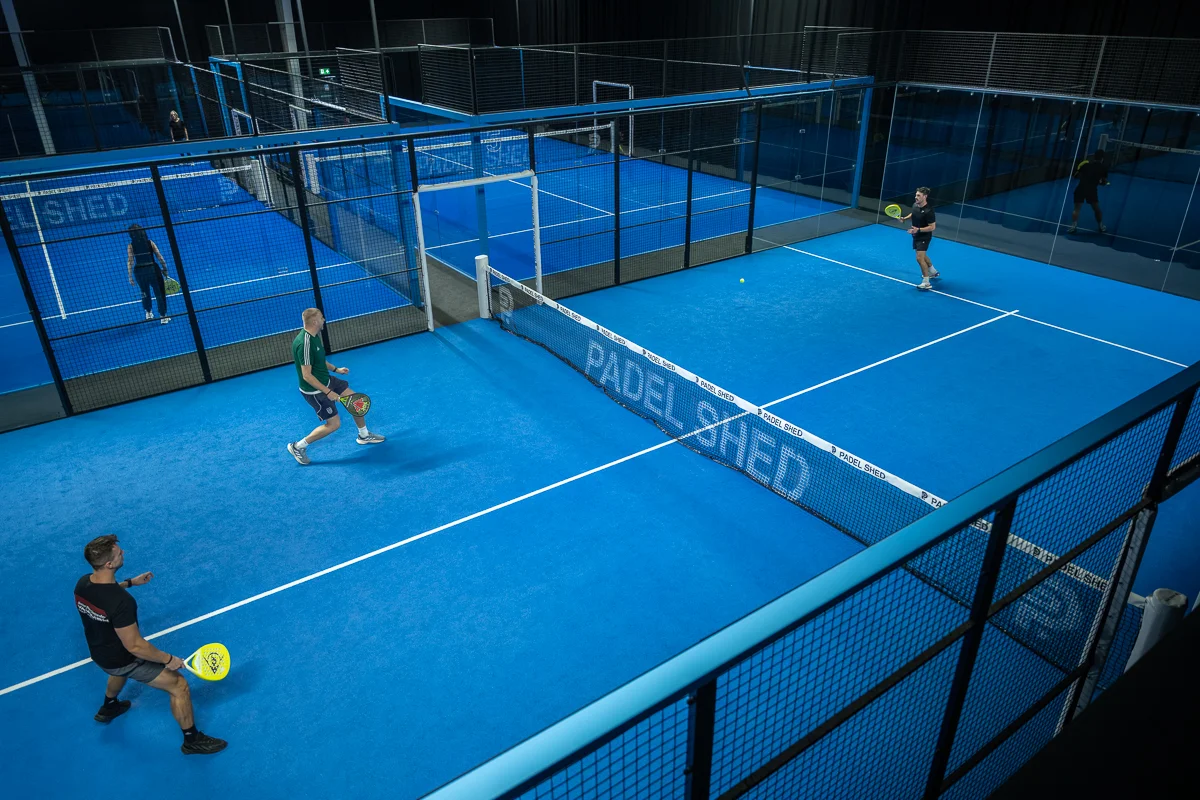
Padel arrived in England in Huddersfield. Two courts, one enthusiast, and the conviction that the sport deserved an audience here – that was April 2011 at Huddersfield Lawn Tennis and Squash Club. Fifteen years later, nine indoor panoramic courts have opened a few miles away on Tandem Industrial Estate, operated by a team with deep roots in the town and a clear view of what they wanted to build.
The people behind Padel Shed are not newcomers to leisure. They have operated BigBox, a major leisure destination that shares the same car park, and they spent time watching padel grow before deciding to move. The result is one of the largest dedicated padel facilities in the north of England – and a club that John Preston, the General Manager, describes as having a responsibility to the sport’s history in the town.
We asked John five questions about how the club came about, what it offers, and what to expect if you walk through the door for the first time.
Padel Shed at a glance
Address: Tandem Industrial Estate, Huddersfield, HD5 0AL
Courts: 9 indoor panoramic courts
Facilities: Club lounge, premium members area, bar, pool tables, pizza
Membership: Premium or Casual – court hire charged on top
Parking: Free on-site (shared with BigBox)
Booking: Via the Padel Shed app
Social sessions: Available throughout the week; new-player sessions launching soon
Website: padelshedclub.com
How Padel Shed came about
“Padel Shed came about through a combination of experience, timing and a clear belief in the opportunity for padel in Huddersfield,” John says. “Some of the team behind the club have a strong track record in developing and operating successful leisure destinations, including the iconic BigBox leisure club.”
The team had been tracking padel’s growth for some time. The decision to enter the sport was not impulsive – they wanted to do it properly, and they waited for the right moment. When a venue became available, sharing the BigBox car park, the fit was obvious. “We already understood the local market well and felt confident that by combining the rising popularity of padel with our experience in creating high-quality, community-focused venues, we could build something special,” John says.
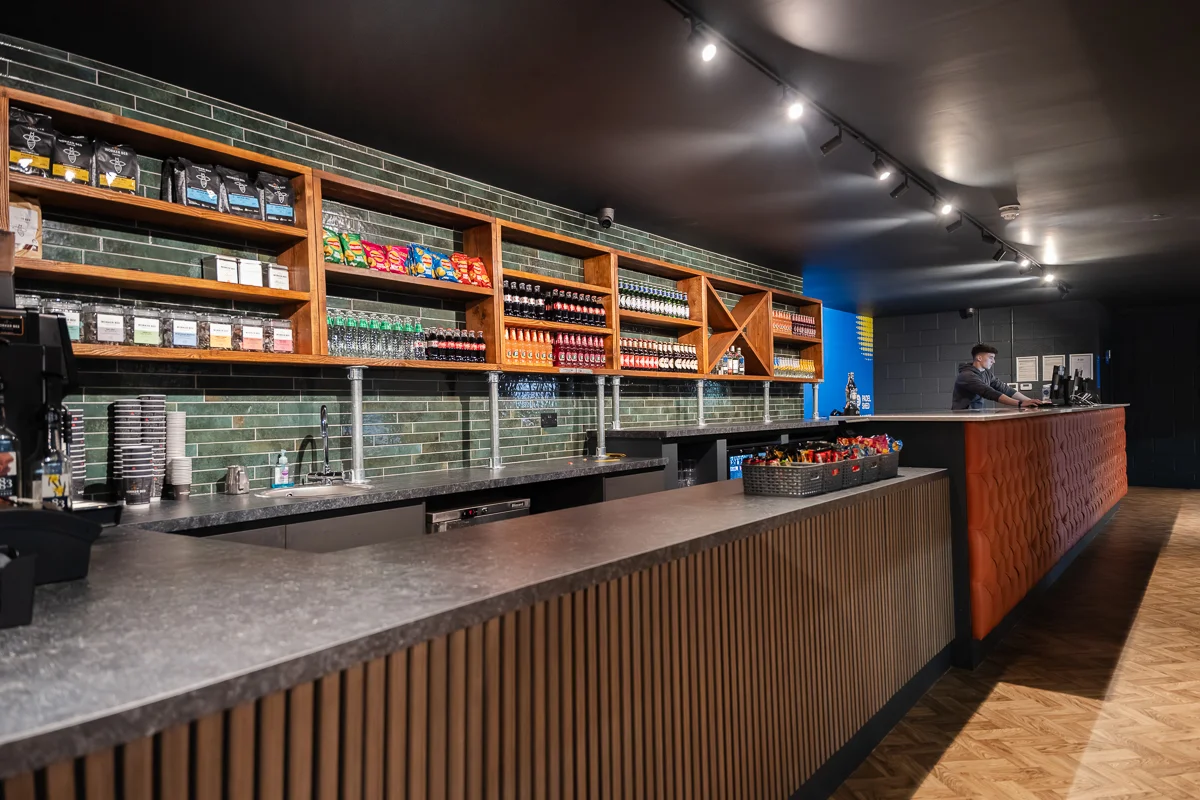
That combination – operational experience, local knowledge, and the right site – shapes what the club has become. Nine courts, a club lounge, a premium members area, a bar, pool tables, pizza, and a social calendar built around community are the result.
Huddersfield’s place in UK padel history
For anyone who knows British padel history, Huddersfield has a particular significance. The courts at Huddersfield LTSC were among the first publicly available padel courts in the country. Peter Vann, the club’s chairman at the time, is widely considered the Godfather of British Padel – the person who pushed hardest to bring the sport to England when almost nobody here had heard of it.
The Padel Shed team was aware of that history. “Much of our team lives locally, so there was a real sense of pride in bringing padel back to an area that has such an important place in the sport’s history in England,” John says.
He is careful not to overstate it. The heritage was a point of awareness, not the trigger. “It was definitely something we were very aware of,” he says. What it added was a sense of responsibility. “We felt that if we were going to bring padel back home, we had to do it properly and create a club that the local area could be proud of.”
That is a useful framing for understanding the ambition behind the club. It was built to a standard – quality was the commitment, not compliance with a brief.
For the full picture of padel in Huddersfield – including the original courts at HLTSC – the Huddersfield padel guide covers both venues side by side.
The launch strategy: removing barriers to entry
When the club opened, around 80% of players had never played padel before. Creating new players was central to the strategy from the start, and the way the club launched reflected that.
In the first 30 days, Padel Shed offered free sessions for local schools, colleges, universities, businesses, and charities. The thinking was direct: “We wanted to remove as many barriers to entry as possible and give people the chance to get on court, try the game and enjoy it in a relaxed setting,” John says.
The results have stayed with the club. “It has been brilliant to see so many of those people who came to our early taster sessions and socials now playing regularly and helping to build a thriving community around the club.” The logic was straightforward – a club-sized community takes time to build, and the fastest way to build it is to bring people in before they have a reason to come.
Hosting the Yorkshire Padel Championships followed. The club has positioned itself as a regional hub from the start.
What the club offers week to week
The membership base at Padel Shed is varied enough that there is no single answer to what a typical week looks like. “We have players who come in before work, others who join daytime socials, and plenty who play after work or later in the evening, so the club has a real sense of energy throughout the day,” John says.
One aspect of the club stands out compared to many venues: members stay. “With the club lounge and premium members area, members often stay to socialise, play pool, have a drink, watch sport or grab a pizza,” John says. “It has become a real social hub, which is a big part of what makes the club feel different.”
For new players coming in for the first time, the social sessions are the natural entry point. The club is also launching dedicated sessions for people new to the game – a structured route in before moving on to open court hire. “They can expect a very warm welcome,” John says. “Our team is always on hand to make sure you feel comfortable, looked after and ready to enjoy your first game.”
If you want to know what to expect from the learning curve in the early weeks, your first month of padel covers the basics – how quickly the game tends to click, what the social session format looks like, and how most beginners progress.
What to expect from your first visit
John’s answer to this question is brief and direct: “Be prepared for your next big obsession.”
Padel tends to catch people. The four-wall court, the social format, and the low barrier to having a decent rally from session one combine to make it the kind of sport people come back for. “The great thing about padel is how quickly it gets under your skin,” John says.
The practical stuff is handled. John says the club can sort out rackets and kit on arrival, so there is nothing to organise in advance. For a first session, that is all you need to know. When you are ready to buy your own, the padel racket buying guide covers what to look for.
The main thing is to show up. “Most importantly, expect a warm welcome.”