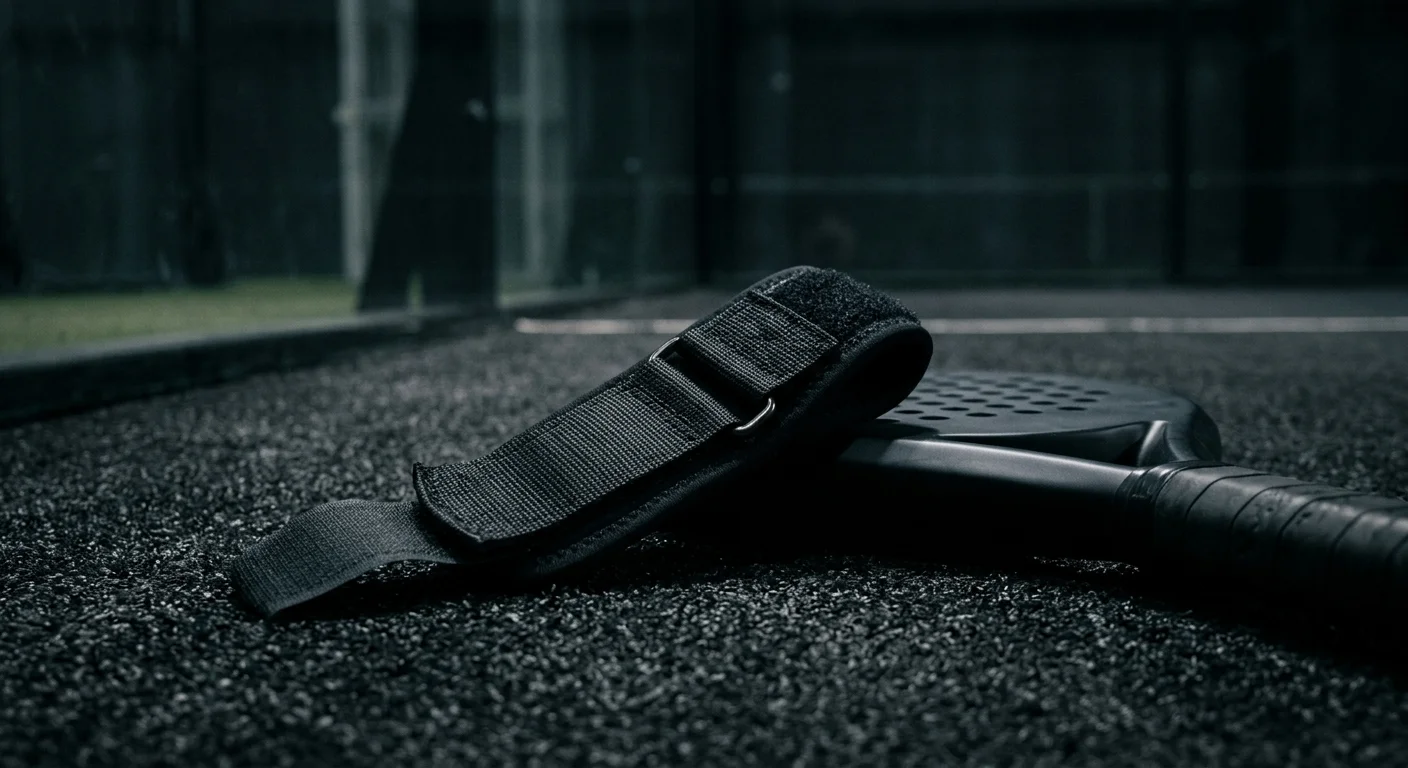
If the outside of your elbow aches after a session, you’ve probably already searched for a brace. It’s the obvious first move – cheap, available same-day, no appointment needed. It can help. It’s also easy to buy the wrong type, wear it the wrong way, and assume it’s solved a problem that’s coming from your racket or your grip instead.
This guide covers what an elbow support does, the difference between a strap and a sleeve, and when to stop treating the symptom and start treating the cause. If you haven’t already, our guide to rackets for tennis elbow covers the racket side of this in full – this piece is the companion to it, focused on the support product itself.
What an elbow support does (and doesn’t do)
An elbow support reduces the load reaching your sore tendon during play. It doesn’t repair tissue or clear inflammation on its own.
Most padel-related elbow pain – the ache on the outside of the joint, often called tennis elbow or lateral epicondylitis – comes from repeated strain on the tendon that attaches your forearm muscles to the outer elbow bone. Every volley, every mistimed smash, every shot with a racket that’s slightly too heavy adds a small amount of load. A support brace works by changing where that load lands.
A counterforce strap does this directly: worn a few centimetres below the elbow, it applies pressure that redirects force away from the inflamed tendon attachment point and spreads it across a wider area of muscle. A compression sleeve works differently, applying even pressure around the whole joint to improve circulation and reduce the general swelling and stiffness that come with overuse.
Neither fixes the reason the tendon is under strain in the first place. That’s usually some combination of racket weight, grip size, technique, and how much recovery time your arm gets between sessions. A support brace buys you comfort and, for many players, a real reduction in pain during play. It won’t address the underlying cause.
Strap vs sleeve – which type for padel
A strap suits sharp, localised pain you can point to with one finger; a sleeve suits a duller ache spread across the whole elbow.
The confusion between these two products is common, and it matters because they’re built for different symptoms. A counterforce strap (sometimes called an epicondylitis clasp) is a narrow band with a small pad, worn tight around the forearm just below the elbow joint – not over it. It’s designed for classic tennis-elbow pain: a specific, identifiable sore spot on the outside of the joint that flares up when you grip the racket hard, particularly on backhands and volleys.
A compression sleeve covers the whole elbow, top to bottom, like a tight sock. It’s a better fit for general soreness, stiffness after play, or mild ongoing discomfort that isn’t sharply localised. Some players also find a sleeve more comfortable for long sessions, since it doesn’t concentrate pressure on one point the way a strap does.
If you’re playing recreationally once or twice a week and the pain is mild and diffuse, a sleeve is usually enough. If you’ve got a specific sore point that flares on impact, a strap targets that more precisely. Some players use both – a strap during actual play, a sleeve for general support around a session. Neither is a padel-specific product; the UK market for these is entirely generic sports-injury stock sold through pharmacies and general retailers like Boots and Amazon, not through padel or racket-sport specialists. That’s fine – the mechanism of a counterforce strap or a compression sleeve doesn’t care what sport put the load on your elbow – but it’s worth knowing you’re not missing some padel-branded version that does the job better.
When to wear one, and when to see a physio
Wear a support during play; see a physiotherapist if pain persists beyond two to three weeks despite rest and a brace.
For most players, wearing a support during matches and training sessions is sufficient. There’s little benefit to wearing one all day – the load reduction only matters when you’re loading the tendon, which for most of us means when we’re on court. A brace worn constantly can also mask pain you should be paying attention to, making it easier to keep playing through something that needs rest.
If pain shows up, the first sensible steps are the boring ones: a few days off court, ice after activity, and simple forearm stretches. A brace supports that rest period; it doesn’t stand in for it. Most mild cases improve within one to two weeks with a lighter schedule and some basic self-care.
If pain persists beyond two to three weeks despite rest, or if it’s sharp enough to affect grip strength or everyday tasks like carrying shopping or turning a door handle, see a physiotherapist. Padel elbow that’s ignored for months can take considerably longer to resolve than the same injury caught early – a proper diagnosis also rules out other causes of elbow pain that a brace won’t touch at all, such as nerve irritation or a joint issue instead of a tendon one. None of this is medical advice specific to your situation; it’s general guidance, and a physio who has examined your arm will always know more than an article can.
What matters more than a brace
A brace manages symptoms. The two changes most likely to prevent them in the first place are racket weight and grip size.
If you’re reaching for an elbow support regularly, it’s worth asking what’s putting the strain there before you buy one. Our racket weight guide covers this properly, but the short version is that rackets above roughly 375g meaningfully increase the shock your forearm absorbs on every shot – and a lighter, softer-core racket often reduces elbow strain more than any brace will.
Grip size matters just as much, and it’s the one players skip most often. An undersized grip forces you to squeeze the handle harder to keep it stable through the swing, and that sustained tension loads the exact tendon a support brace is trying to protect. Our grip size guide walks through measuring your hand properly – it takes five minutes and for a lot of players it turns out to be a bigger factor than the racket itself.
We’ve written a full companion guide to choosing a racket for tennis elbow, including named rackets at a few price points that suit a sore or elbow-prone arm. If you’re buying a brace because your current setup is heavy, head-heavy, or badly gripped, that guide is the better next stop than a second brace.
FAQ
Does an elbow support help with padel elbow pain? It can reduce load on the sore tendon during play, which eases pain for many players. It doesn’t treat the underlying inflammation or replace fixing racket weight and grip size.
Strap or sleeve – which is best for padel? A counterforce strap for sharp, localised pain below the elbow. A compression sleeve for a duller, general ache across the joint. Different jobs, not interchangeable.
Should I wear it during play only, or all the time? During play is enough for most players. Wearing one all day isn’t necessary and won’t speed recovery – rest and load management do that work.