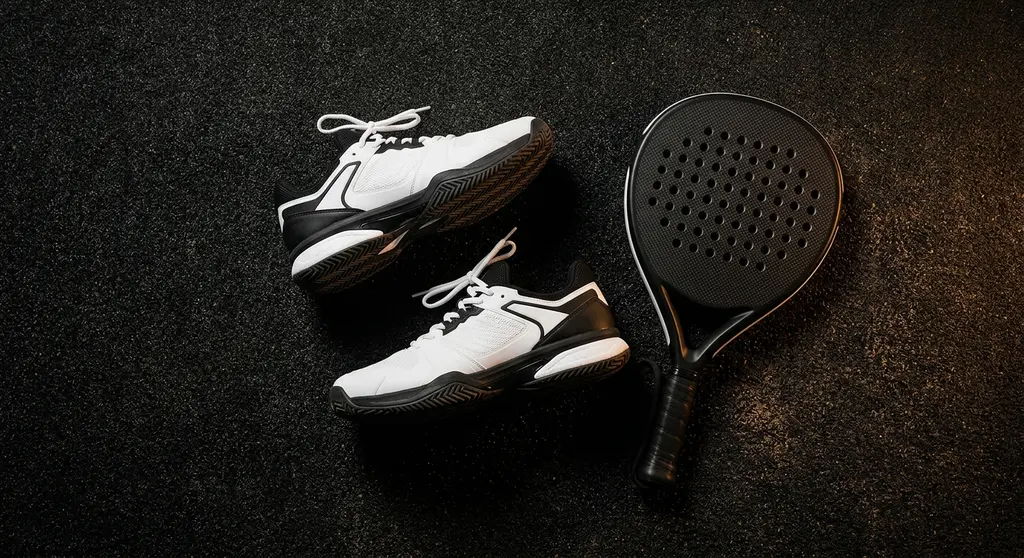
Search “Nike padel shoes” and Nike’s own UK site will hand you a curated page of results. Look closer at what’s on it and every model is a clay-court tennis shoe wearing a padel label. That’s not a knock on the shoes – it’s just not what the search implies, and nobody selling you the page is going to point it out.
Adidas and ASICS both build padel-specific lines with their own names, their own construction, and their own marketing. Nike hasn’t done that. If you’re choosing between the three for your next pair of court shoes, that difference is worth knowing before you spend £120.
Does Nike make padel-specific shoes?
Nike’s UK padel shoe range is clay-court tennis footwear rebranded for padel buyers – there’s no dedicated Nike padel line.
The Vapor Pro 3, Vapor 12, and Vapor Lite 3 all launched as NikeCourt clay-court tennis shoes first. Nike’s padel hub on nike.com/gb simply collects the models whose Claybreaker herringbone outsole happens to suit padel’s artificial turf, and sells them as the padel option. Adidas built Crazyquick and Courtquick specifically for padel’s lateral movement. ASICS has run its Gel-Padel line since the late 2000s. Nike has neither – what it has is a well-made tennis shoe that grips padel’s surface reasonably well, sold with padel imagery on the product page.
There’s a wider signal here too. Padel trade press lists Skechers and Nox as the 2026 Pro Am Padel Tour’s footwear and racket partners; Nike isn’t among them. Worth noting: Skechers has no padel-only shoe either, and sells its Viper Court range for pickleball, padel and tennis. Reports in the padel trade press suggest Nike is weighing an official entry to the sport around 2027, possibly signing a top-ranked player to front it. Until that happens, what you’re buying is Nike’s tennis engineering with a padel audience in mind, not padel-specific product.
The current Nike range and UK pricing
Three models make up Nike’s practical padel-suitable range in the UK, spanning roughly £80 to £165.
The Vapor Lite 3 sits at the entry point, around £80 – a simplified build aimed at players who want a reliable clay-soled shoe without paying for Nike’s top-tier cushioning. The Vapor Pro 3 is the shoe most regular UK players end up looking at, around £120, and it’s the pick most worth your attention: Air Zoom cushioning in the forefoot, a Claybreaker herringbone tread built specifically to grip clay and resist the debris build-up that clogs a lot of court soles, and a lighter build than the previous Vapor generation. At the top, the Vapor 12 runs from roughly £145 up to £165 for premium colourways – Nike’s most responsive tennis platform, aimed at players who move fast and want every bit of forefoot spring the shoe can give.
Prices move around by colourway and retailer, so treat these as a starting reference rather than a guarantee – check the live price before you buy.
How Nike compares to adidas and ASICS
Nike’s shoes feel like well-cushioned tennis shoes on a padel court, because that’s what they are – adidas and ASICS give you something built for padel’s specific stop-start demands instead.
Adidas’s Crazyquick range uses a Slingframe construction designed around padel’s constant lateral cuts and sudden direction changes – a different problem to the one tennis shoes solve, where more of your movement happens forward and back along a baseline. ASICS leans on GEL cushioning for players managing knee or heel load over long sessions, again engineered around padel’s demands specifically rather than adapted from another sport.
That doesn’t make the Vapor Pro 3 a bad shoe for padel. Air Zoom cushioning is effective, and the Claybreaker sole does its job on turf. But if lateral stability during hard direction changes matters more to your game than straight-line responsiveness, adidas or ASICS are built closer to that brief. Nike’s strength is a shoe that already does one demanding court sport well and happens to transfer reasonably to another.
Which UK court surfaces suit Nike’s outsoles
Nike’s Claybreaker herringbone soles suit UK padel courts well, because the tread Nike engineered for clay tennis courts overlaps closely with what artificial turf needs.
Most UK padel venues run sand-dressed or rubber-dressed artificial turf, and clubs generally require non-marking soles to protect it. Claybreaker’s full herringbone pattern was built to grip loose clay without letting debris clog the tread – a similar problem to sand-dressed turf, where infill can work its way into a shoe’s grooves over a session. In practice, Nike’s clay-court tennis shoes hold up well on the surface most UK players use them on.
Where it’s worth being careful is indoor hard-court venues, which are less common in the UK but do exist. A sole built for clay’s give can feel harder underfoot on a rigid indoor surface over a long session – not a dealbreaker, but worth trying before you commit to a pair if your club runs hard courts.
Where to buy Nike padel shoes in the UK
Nike direct (nike.com/gb) carries the full range and gets new colourways first, with JD Sports and Pro:Direct Padel as the main UK alternatives.
Nike.com is the most reliable place to see the complete current lineup, including sizing and colourway availability. JD Sports stocks Nike’s tennis and padel-marketed models alongside its wider Nike range, and Pro:Direct Padel – a padel specialist rather than a general sports retailer – is worth checking for stock when Nike’s own site runs low on a size. As with the adidas range, prices vary by retailer and colourway, so a quick check across two or three stockists before buying is worth the five minutes.
If you’re weighing Nike against the padel-specific alternatives, our breakdown of what matters in a padel shoe covers sole type, lateral support, and fit in more depth, and our UK padel shoes guide rounds up the wider market including ASICS and the other main brands.