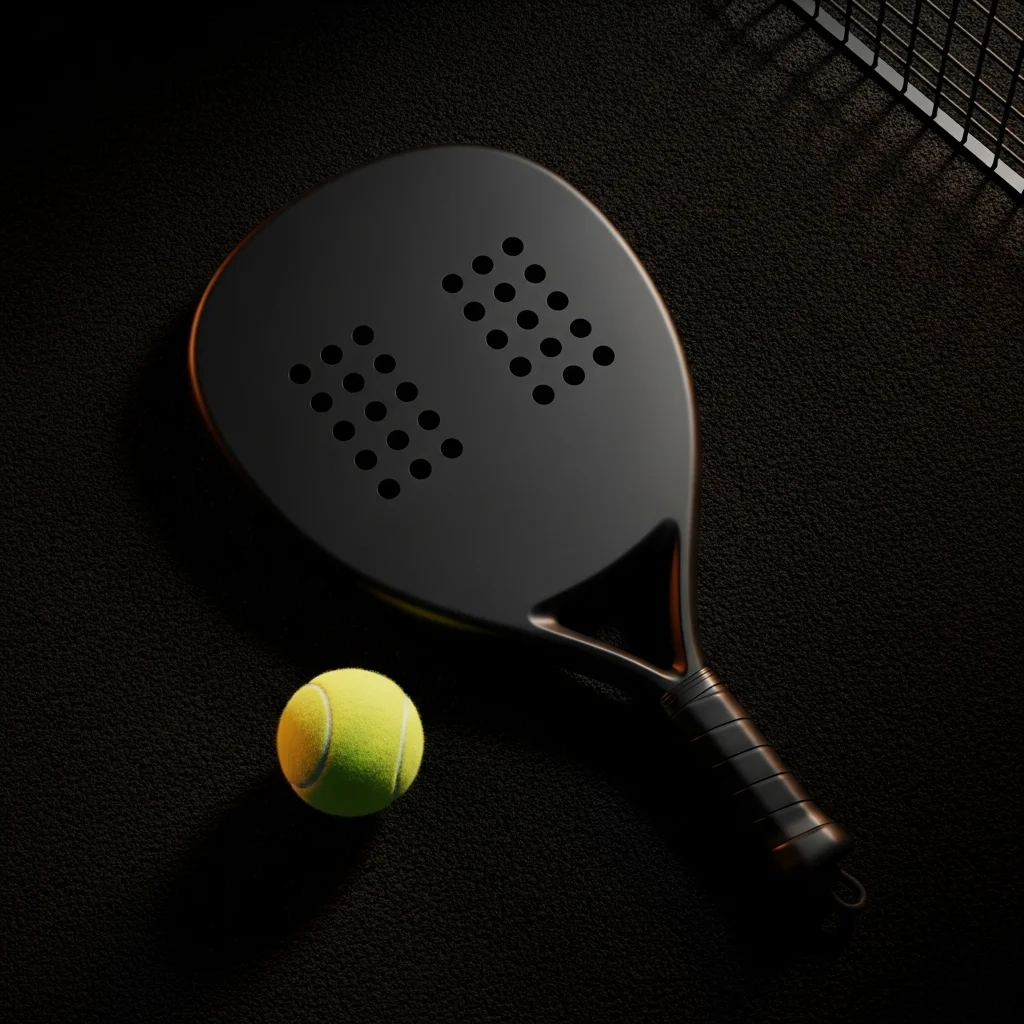
Buying your child their first padel racket feels like it should be simple: get a smaller version of what the adults use. It isn’t quite that simple. Junior rackets vary a lot in weight and shape, and a racket that’s too heavy for a child makes the game harder to enjoy while they’re learning.
A common temptation is buying an adult racket “to grow into.” It feels economical, but a racket that’s too heavy makes it harder for a child to time a shot and harder to build the habits that make padel fun in the first place. This guide covers what matters most when choosing a racket for a child – maker age guidance, weight, shape, grip, and which brands and UK retailers to check first.
Junior padel rackets at UK shops
Most junior racket listings give a weight and shape but no length, and we couldn’t find a published height-to-length chart from the major brands. Some junior rackets are full length: Express Padel lists the Adidas Arrow Hit Junior as “a standard length padel racket (455mm)”, the 45.5 cm maximum the FIP rules set for any racket. So use the maker’s age and level guidance, plus weight, as your main checks.
Here’s what UK shops listed on 18 October 2026:
| Racket | Shape | Weight | Maker/retailer guidance | UK price |
|---|---|---|---|---|
| Babolat Alioth Mini JR | Round, head-light | 290 g ±10 | Beginners under 8 | £59.99 (All Things Padel) |
| Bullpadel Indiga Junior 2026/27 | Teardrop | about 280 g | Children starting padel | £58.98–£60 (Padel Nuestro UK, PadelHQ, Padel Market) |
| Adidas Arrow Hit Junior 2026 | Round | not listed | Juniors, all abilities | £52.99–£58.50 (PDH Sports, Express Padel, Padel Shack) |
| Head Coello Junior 2026 | Teardrop | 310–325 g | Juniors | £61.94–£69.99 (PDH Sports, Padel Shack, Everything Padel) |
| Dunlop Galactica Junior 2025 | Teardrop | 310–330 g | Juniors, beginner/intermediate | £37.99 (Padel Nuestro UK) |
| Dunlop FX Junior 2026 | Teardrop | 335–345 g | Juniors | £49.99 (Everything Padel) |
| Babolat Alioth Pro JR | Not listed | not listed | Ages 8 to 12 | £79.99–£112.99 (Everything Padel, PadelHQ, All Things Padel) |
| Bullpadel Vertex Junior and Hack Junior 2026 | Diamond, medium balance | 335–345 g | Young players refining their technique | £55.49–£72 (Everything Padel, Padel Market, PadelHQ, Express Padel) |
| Head Speed Junior 2025 | Teardrop | 355–370 g | Advanced (Padel Market) | £56.49–£76.50 (Everything Padel, Padel Market, PDH Sports) |
If your child is between two options, the lighter and more forgiving one is the safer call for a beginner. Prices change quickly as junior ranges are refreshed, so check the current listing.
Weight matters more than the racket itself
At junior level, weight is one of the biggest factors in how easily a child can control the racket. A heavier racket carries more momentum into the ball, but for a child who’s still learning to track the ball and time their swing, extra weight mostly means a slower swing and a more tiring session.
The junior rackets above run from about 280 g to 370 g, so “junior” alone doesn’t tell you much: the Head Speed Junior is as heavy as many adult rackets, while Bullpadel’s Indiga Junior is about 280 g. Bullpadel says the Vertex and Hack Junior’s 335–345 g “helps reduce fatigue for junior players”, but they’re aimed at young players who are already refining their technique. If you’re choosing between two rackets for a beginner, pick the lighter one.
Round or teardrop for a beginner
Padel rackets come in three broad shapes: round, teardrop, and diamond. Diamond-shaped rackets shift the sweet spot toward the tip for power and suit players who already have consistent technique.
Round rackets put the sweet spot nearer the centre of the face, which is more forgiving of off-centre hits. For a young beginner, the priority is getting the ball back over the net consistently and building confidence rally by rally. Junior ranges don’t make this choice for you: Babolat’s Alioth Mini and Adidas’s Arrow Hit Junior are round, Head, Dunlop and Bullpadel’s Indiga juniors are teardrops, and Bullpadel’s Vertex Junior and Hack Junior are diamonds. For a first racket, choose round or teardrop.
Check the grip
A grip that’s the wrong size changes how a child holds the racket on every shot, and a child who can’t hold it comfortably tends to squeeze harder.
Some junior rackets are built with this in mind. Babolat says it reduced the grip size on the Alioth Mini JR and added an “Improver Grip” to help children position their hand, and Bullpadel’s Indiga Junior has a “Grip Zone” designed to correct the grip of learning players. Most listings don’t give a grip circumference, so if you can, let your child hold the racket in a shop, or check the maker’s details before you buy online.
Brands, retailers, and budget
Decathlon’s own-brand Kuikma range is the obvious high-street option. We couldn’t check its junior models, weights or prices: decathlon.co.uk blocked our checks on 18 October 2026, so we can’t confirm what it currently sells or how it compares.
Adidas, Babolat, Bullpadel, Dunlop, Head, Nox and Wilson all sell junior rackets through UK padel shops, often named after their adult families (Vertex, Hack, Coello, Bela). That can help if your child later wants an adult racket from the same maker.
For UK stock, PadelHQ, Everything Padel, Padel Market, PDH Sports, All Things Padel, Express Padel, Padel Shack and NINEPADEL all listed junior rackets on 18 October 2026, and Padel Nuestro’s UK site listed 38 junior products. Availability shifts through the year as junior ranges get refreshed, so check current stock before you settle on last season’s model.
Junior padel rackets are cheaper than adult performance kit, and there’s little reason to spend big on a racket for a child who’s still developing. The branded rackets above cost about £38–£113, with most between £50 and £75. Save the higher end for a child who’s playing regularly and has outgrown a beginner racket.
Which junior racket should you buy?
For a first racket, buy a light round or teardrop junior racket that matches the maker’s age guidance, and upgrade once your child is playing regularly.
- Youngest players (under 8): the Babolat Alioth Mini JR (290 g, round, aimed at beginners under 8) or Bullpadel’s Indiga Junior (about 280 g, teardrop) are among the lightest junior rackets we found at UK shops.
- Older beginners: the Adidas Arrow Hit Junior (round) and Head Coello Junior (310–325 g, teardrop) sat at £52.99–£69.99 on 18 October 2026.
- Children already playing regularly: Babolat aims the Alioth Pro JR at ages 8 to 12, and Bullpadel aims the Vertex Junior and Hack Junior (diamonds, 335–345 g) at young players refining their technique.
Whichever you choose, check the current listing for weight and age guidance before you buy.
When to size up
Two signals tell you it’s time for the next racket: physical growth and playing level. If your child has outgrown the maker’s age band, or the racket feels small and light in their hand and they’re swinging hard to get the ball deep, it may be time to move up. On the playing side, if they’re consistently hitting harder and with more spin than a soft beginner racket handles comfortably, that’s a sign they’re ready for a firmer model, whatever their height.
There’s no fixed timeline. Some children move through two or three rackets in a year of growth; others stay with one for two seasons. Check the fit every few months, since last year’s racket may not suit this year’s child.
Is a hand-me-down racket worth using?
Only if its weight and the maker’s age guidance suit your child now – a racket that fitted an older sibling last year may be too heavy for a younger one.
A racket that suited your eldest at eight won’t automatically suit your youngest at the same age if they’re a different size or strength, and a racket your child has grown out of is rarely worth keeping “for next time” – by the time a younger sibling is ready, junior ranges have usually moved on anyway. If you do have a hand-me-down that fits, check the grip too – that’s the detail most likely to be wrong. If it isn’t right, sell it or pass it on.
If your child is just starting out and you want the wider picture on getting them into the sport – age to begin, where to find junior sessions, and what a first taster costs – see our complete guide to padel for kids in the UK. And if you’re choosing your own first racket at the same time, our guides to buying your first padel racket, a first padel racket in the UK, and getting your grip size right cover the adult side of the same decisions.