
Stockbridge, Edinburgh. A ground that has hosted cricket for nearly two centuries, grass tennis courts – the only ones left in Scotland – and five squash courts still in regular use. When The Grange Club added padel 18 months ago, it did so as one of the most established multi-sport clubs in the country.
The sport filled up fast. Membership is now on a waitlist. Pay-to-play keeps the courts busy with weekday office groups, stay-at-home parents, and weekend family sessions. The Grange has become one of Edinburgh’s most in-demand padel venues – and it has barely had to try.
We spoke to Rick at the club to find out how padel landed here, who’s showing up, and what the club has planned.
At a glance
Address: The Grange Club, Raeburn Place, Edinburgh EH4 1HQ
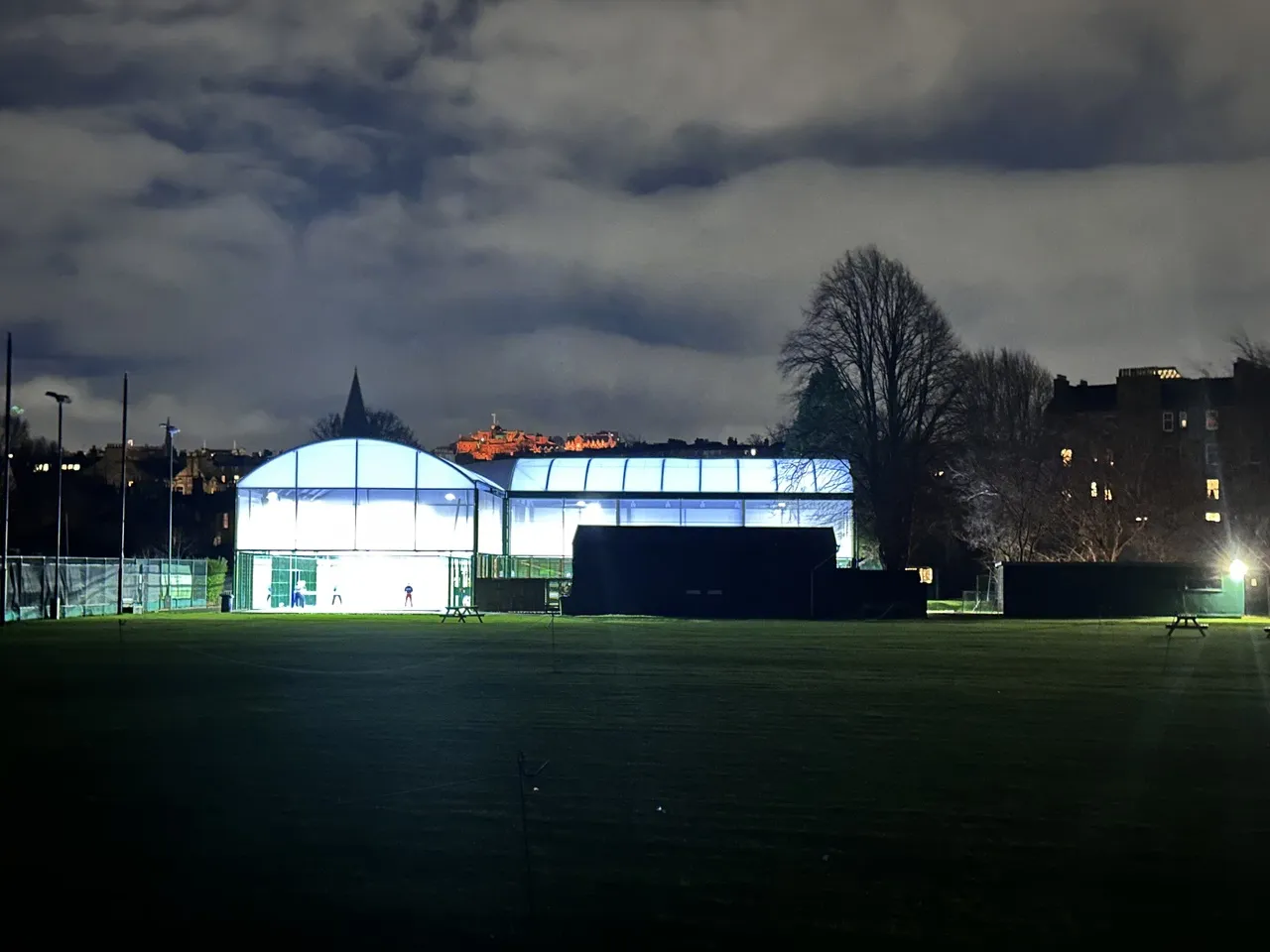
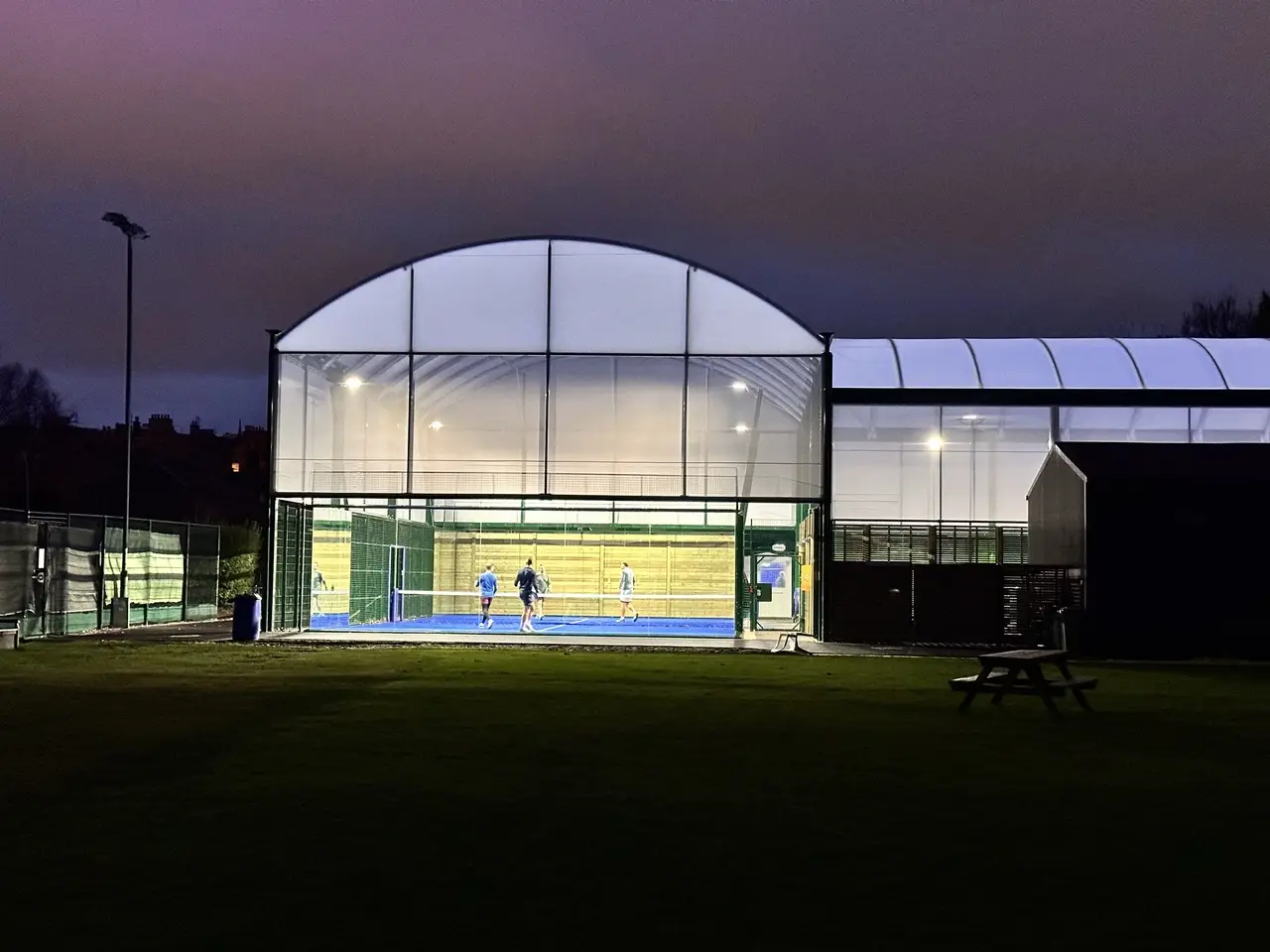
Courts: 2 covered panoramic courts
Facilities: Multi-sport clubhouse, bar, changing rooms; cricket, hockey, squash, and grass tennis on site
Membership model: Hybrid – membership tier (priority bookings, internal tournaments, social events) with a significant waitlist; pay-to-play available for non-members and those on the waiting list
Parking: On-site parking available at the club
Booking: Book via ClubSpark
Social sessions: Social sessions, americano formats, and coaching run throughout the year
Website: thegrangeclub.com
A club that was built for racket sports
The Grange Club is old enough that padel didn’t need to prove itself when it arrived. The club has been running cricket since the 1800s, is the birthplace of tennis in Scotland, still has grass courts (the last in the country), and runs five squash courts that remain in regular use. When you already have hockey and cricket players with elite hand-eye coordination, and squash players who understand back-wall play, padel arrives with a ready audience.
“Padel was a natural fit,” Rick told us. “The Club has a long history of racket sports. It is the birthplace of tennis in Scotland and the only club in the country still with grass courts. And we are one of the larger squash clubs with 5 squash courts. Padel is also a natural crossover sport for our hockey and cricket members bringing in their hand-eye skills.”
That crossover has proved valuable in two directions. Established members – including older players for whom squash is no longer a realistic option – have found in padel a sport that matches their sporting instincts without the physical demands of a harder-running game. At the same time, the arrival of padel has brought in new members, which Rick describes as adding “vibrancy and freshness” to a club with a long heritage.
Who plays, and when
The two covered courts are used differently depending on the day. During the week, it’s largely working professionals who can take an extended lunch hour – a demographic that shows up at padel venues across the UK, given the sport’s social format and the reasonable time commitment a session requires. But The Grange also draws stay-at-home parents who book courts during school hours, building regular groups around the sport.
Weekends shift toward families and social groups, which tracks with the broader picture of how recreational padel is growing in Scotland. The club capped its membership numbers, but the pay-to-play option keeps utilisation high and – as Rick notes – functions as a way to introduce prospective members to the facility.
“From a club perspective, the pay-to-play is a good way to improve utilisation of the club and recoup the investment, as well as advertise the facilities to prospective members.”
It is a practical model, but it also means the sport at The Grange is more accessible than the waitlist might suggest. If you want to get on court, you can.
What the standard looks like
There are always a few experienced players at any club, and The Grange has them. A cohort of players who had played padel before the Grange courts opened set the early standard, and the rest are catching up quickly. Given that The Grange draws from hockey and cricket, there is more athletic ceiling than you might find at a venue that recruits purely from tennis.
“Our tennis and squash players naturally bring volleying and back-glass strengths with them – though there is a tendency from most to hit the ball too hard and so the real learning point is hitting the ball more softly,” Rick told us.
That observation is familiar to anyone who watches new padel players arrive from squash. The instinct is to use pace and power; the game rewards patience and placement instead. At The Grange, with a cohort of multi-sport athletes who arrived with real racket skills and are working through that learning curve, the standard is probably rising faster than at most new venues.
The atmosphere that built itself
Most padel venues have to work to build community. The Grange didn’t have that problem. Almost 200 years of multi-sport membership means the club already had a social infrastructure – changing rooms, a bar, events, shared history. Padel arrived into that and added its own layer.
“As an existing facility with almost 200 years of history, the club already had an established community around it, though this has undoubtedly been enhanced and evolved with the arrival of padel,” Rick said. “What has been great to see is new friendships forming, whether they meet at coaching sessions, a social or just in a random game posted on one of the WhatsApp groups.”
That WhatsApp-group layer – informal, player-organised, largely independent of club administration – is one of the things that makes padel work as a social sport. Players arrange games among themselves between the official sessions; the club facilitates it but doesn’t have to drive it. At The Grange, with its existing member base, those networks formed quickly.
What comes next
Eighteen months in, The Grange is at the stage where expansion becomes the obvious question. Two covered courts, a full membership, a pay-to-play programme that keeps utilisation high – the demand is there. Rick says the club is working through the options now.
“With busy courts and a sizeable waitlist for membership, the obvious question is where and how to expand, which we are working through now. After operating for 18 months we are now finding our feet in terms of the balance between open sessions, social sessions, americanos, tournaments, coaching etc.”
That balance – between giving the courts over to open play, structured social formats, and competitive events – is a decision every growing padel club reaches eventually. The Grange’s instinct is to stay true to what makes it distinctive: a multi-sport club with a long history, a broad membership, and a character that comes from 200 years of sport rather than from being a single-purpose padel venue.
“The Club’s DNA is as a multisport club so there is a balance to be drawn between maintaining a Club atmosphere, making it a great place to play padel and without becoming a corporate behemoth.”
That’s a fairly clear brief. At The Grange, padel is one sport among many – and for the players who’ve found it here, that seems to be precisely the point.
The Grange Club is in Stockbridge, Edinburgh. Pay-to-play sessions can be booked at clubspark.lta.org.uk/GrangeDyvoursLTC. For membership enquiries and the waitlist, visit thegrangeclub.com. Edinburgh’s other padel venues are covered in our Edinburgh padel guide.